
Business Story of Trust - Since 2013
Aug 21, 2026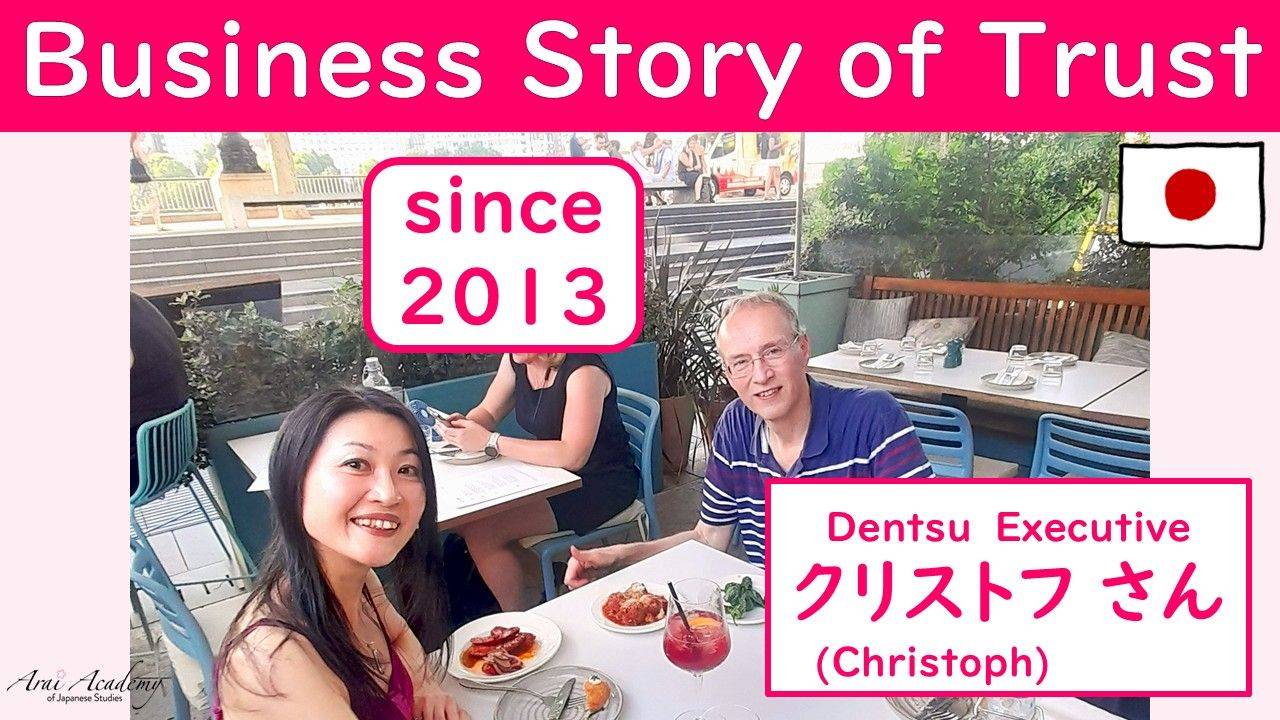
*日本語版は英文に続きます
Today, I would like to share a story that has continued since 2013 – a long-standing relationship of trust with an executive working for a Japanese company.
Throughout my work in Japanese language education, intercultural communication, and Beginner-level dialogue support (SpeakBeginnerJapanese), I have always valued the quiet connection between mind and expression (Mind = Expression).
Within this relationship, which has continued for more than ten years, there have been many gentle insights into what truly matters when people build trust with one another.
In this blog, I share the story and the five Kizuki (insights) that emerged from it. I hope they offer something helpful as universal principles for building trust, and become a quiet hint for your everyday communication.
The Story
In 2013, while I was teaching at King’s College London, my manager offered me an unexpected opportunity.
“Dentsu staff would like to try a Japanese taster lesson. Would you be willing to teach it, Arai-san?”
King’s College provided not only university courses but also programmes for external organisations.
At that time, I had been teaching Japanese for six years, and at King’s for only three. I didn’t feel experienced enough, and I wondered whether I could really represent King’s College and teach a taster lesson to employees of Japan’s largest company.
Even so, I felt deeply grateful for the opportunity, precisely because I lacked experience. So I decided to try.
On the day, five people gathered: the Head and Deputy Head of the Language Centre, my manager from the Japanese team, and two Dentsu staff members – who, as I later learnt, were senior executives.
This was the first time I met Christoph.
I was nervous, but I told myself to simply teach as I always do. I delivered a complete beginner lesson to the five participants.
Afterwards, the six of us had a short meeting, and Christoph and the other executive offered an immediate contract. I was genuinely surprised.
They told me they had tried taster lessons at other universities, but mine had been the best. I still feel deeply grateful for their words.
I also remain thankful to my manager at King’s College, who gave me this opportunity.
Later, I learnt that Christoph was an executive at Dentsu, and that the group lessons were intended for the president in London office, her secretary, and several department heads.
For the following year, I visited Dentsu’s London office every week to teach complete beginner Japanese.
During that year, my relationship with Christoph gradually deepened. He attended every lesson without fail, and always welcomed me in the lobby.
When the one-year contract ended, we lost touch for a while. But around three years later, I received a LinkedIn connection request from him. It felt nostalgic, and we exchanged messages.
Soon after, we arranged to have lunch and met again for the first time in three years. We talked about many things and had a wonderful time.
Since then, we have occasionally had lunch together, and he has even celebrated my birthday.
Later, when Dentsu’s London office became the global headquarters, Christoph asked me to teach complete beginner Japanese to the CFO and CSO. Arai Academy of Japanese Studies received a direct contract, for which I remain truly grateful.
Soon after the CFO’s lessons began, his trusted deputy moved to Tokyo for six months, and I started teaching him as well.
The CFO travelled frequently – one week in Japan every month, and regular trips to New York. Despite his schedule, he attended lessons online from his hotel in Tokyo. He valued relationship-building and even delivered a short Japanese greeting in front of 3,000 Japanese employees.
One of the happiest moments was when the CFO, who had never learnt any foreign language, was told by a British friend living in Tokyo:
“I’ve never seen anyone become this good at Japanese in just six months.”
He looked genuinely delighted, and seeing that made me happy too.
The CSO was also deeply interested in Japanese business culture and the differences in how Japanese people perceive things. She often told me she shared what she learnt in the lessons with her team.
I feel grateful to Christoph and all the executives at Dentsu who work so hard for Japan.
Thanks to Christoph’s introduction, I received opportunities to support people working in Japan with their communication with Japanese colleagues. This has been a truly meaningful experience for me.
This summer, Christoph kindly treated me to dinner at a Spanish restaurant along the Thames. He often says he enjoys meeting me, and that makes me very happy.
The warm relationship that has continued since 2013 is one of my greatest joys.
It is no longer a relationship connected through lessons, but a connection between people. I am deeply grateful for it, and I hope to continue cherishing it.
Christoph, thank you so much for choosing my lesson when we first met at King’s College. It would be wonderful to continue our connection.
Quiet Summary Before the Kizuki(my insight)
Over these ten years, I have quietly observed how trust grows between people. From this experience, I have distilled five universal Kizuki that can support anyone’s communication.
🌸Trust-Building Kizuki – Five Universal Principles of Human Trust
- A calm and natural presence opens the door to trust.
→ Direction of action: Meet others with a composed and genuine attitude.
- Trust deepens when we respect the other person’s pace and circumstances.
→ Direction of action: Honour the rhythm and perspective of the person in front of you.
- People trust those who create ways to continue without pressure.
→ Direction of action: Offer forms of engagement that feel light and sustainable.
- Sharing small steps of progress strengthens connection.
→ Direction of action: Treat moments of growth with care and appreciation.
- Human warmth beyond work nurtures long-lasting trust.
→ Direction of action: Value the quiet connections that arise person-to-person.
If today’s story or the five Kizuki brought a gentle hint to your communication, I would be delighted if you visited Learning Café, where I share my Kizuki at a slow and quiet pace.
At Learning Café, I explore the connection between mind and expression (Mind = Expression) and offer small insights each week.
I hope it can become a place where a soft light touches your day.
→ Visit Learning Café here
And if you ever feel unsure about Japanese business communication —
or wonder things like:
“What kind of Japanese creates trust?”
“Is there beginner‑friendly Japanese I can use right away?”
I’ll be hosting a quiet, welcoming Q&A session on:
📅September 5
🕚 11:00 AM (UK time)
My Birthday Seminar: The Essentials of Japanese Business Communication — Q&A
This session is designed for busy professionals who want a safe space to ask questions.
You can bring any doubts or experiences about communicating with Japanese people, and simply ask — freely, without pressure.
No matter your Japanese level, you’ll learn gentle, effective ways of communicating that leave a good impression.
And I hope you’ll quietly gain a sense of how trust is built in Japanese business relationships —
something essential for long‑term success.
If you are interested, you can find the details here.
Let’s grow together — slowly, quietly, and over time.
今日は、私が2013年から続いている、日本の会社で働くエグゼクティブの方々との長い信頼関係のストーリーを紹介したいと思います。
私はこれまで、日本語教育・異文化コミュニケーション・Beginnerレベルの対話支援(SpeakBeginnerJapanese)を軸に、「心と言葉のつながり(Mind = Expression)」を大切にしてきました。
10年以上続いているこの関係の中には、「人が人と信頼を築くときに何が大切なのか」という静かな学びがたくさんありました。
このブログでは、そのストーリーと、そこからの 5つの気づき(Kizuki) をまとめました。 “信頼構築の普遍原則” として、皆さんの日々のコミュニケーションのヒントになったら嬉しいです。
2013年、キングスカレッジで教えていた頃、上司から思いがけない機会をいただきました。「今度、電通のスタッフが日本語のお試しレッスンを受けたいそうだから、新井さん、やってみない?」 と言われたのです。キングスカレッジは大学生向けの授業だけでなく、外部企業へ教えに行くプログラムも提供していました。
当時の私は日本語教師歴6年、キングスカレッジで教え始めて3年ほど。経験が十分とは言えず、日本で一番大きい会社の社員を相手に、キングスカレッジを代表して日本語のお試しレッスンをするなんて、本当にできるだろうかと不安に思いました。それでも、経験が足りない私にこの機会を与えてくださったことがありがたく、挑戦してみることにしました。
当日は、Language Centreの学部長、副学部長、日本語チームの上司、そして電通の社員さん2名(実は上役の方々)という5人が集まりました。このとき、初めてクリストフさんに会いました。
緊張していましたが、「いつものレッスンをするだけ」と心を決め、Complete Beginner向けの内容を5人に教えました。その後、6人で簡単なミーティングがありましたが、クリストフさんともう一人の方から即契約をいただき、本当に驚きました。 ほかの大学でもお試しレッスンを受けていたそうですが、「あなたのレッスンが一番良かった」と言っていただき、今でも深く感謝しています。
また、この機会をくださった当時のキングスカレッジの上司にも心から感謝しています。後から知ったのですが、クリストフさんは電通のエグゼキュティブで、この日本語グループレッスンはロンドンの支社長、その秘書、部長さんたち向けのレッスンだったのです。
それから1年間、毎週ロンドンの電通オフィスに伺い、Complete Beginner向けのレッスンを担当しました。この1年の間に、クリストフさんとの関係が少しずつ築かれていきました。 毎週欠かさずレッスンを受けてくださり、オフィスのロビーでいつも出迎えてくれました。
1年間の契約が終わり、しばらく連絡が途切れていましたが、3年ほど経った頃、LinkedInでクリストフさんからつながりリクエストが届きました。とても懐かしく思い、メッセージのやり取りをしました。
その後、ランチをしようという話になり、3年ぶりに再会しました。 色々な話で盛り上がり、とても楽しい時間でした。それから時々ランチをするようになり、私の誕生日もお祝いしてくれるようになりました。
その後、ロンドンオフィスが電通グループのトップとして活動するようになった頃、クリストフさんからCFOとCSOのComplete Beginner向け日本語レッスンを依頼され、Arai Academy of Japanese Studiesとして直接契約をいただくことになりました。この機会にも心から感謝しています。
CFOのレッスンが始まってすぐ、右腕の方が東京で半年働くことになり、その方のレッスンも開始しました。
特にCFOは毎月日本に1週間ほど出張し、ニューヨークにも頻繁に出張する非常に忙しい方でしたが、東京のホテルからオンラインでレッスンを受けてくれました。日本人3000人を前に簡単な日本語で挨拶をしたり、関係づくりを大切にしている方でした。
一番うれしかったのは、外国語を全く習ったことがないと言っていたCFOが、レッスン開始から半年後、東京に住むイギリス人の友人に「半年でこんなに日本語が上手になった人を見たことがない」と褒められたことです。本人がとても嬉しそうで、その姿を見て私も心から嬉しくなりました。
CSOも日本のビジネス文化や日本人のものの捉え方の違いに深く感心し、レッスンで学んだことをいつもチームに伝えていると言ってくれました。
クリストフさんも、電通で働くエグゼキュティブの皆さんも、日本のために頑張ってくださっていて、そのことにとても感謝しています。
また、クリストフさんの紹介のおかげで、このような素晴らしい機会をいただき、日本で働く方々を日本人とのコミュニケーション面でサポートできたことは、私にとって本当に嬉しい経験でした。 このような機会をくださったクリストフさんには、感謝してもしきれません。
今年の夏は、テムズ川沿いのスペイン料理レストランでディナーをごちそうしてくれました。 「あなたと会うのが楽しい」といつも言ってくれるので、とても嬉しいです。
2013年からずっと、このようなあたたかい関係が続いていることが、何よりの喜びです。レッスンでつながっている関係ではなく、人としてつながっているこの関係に心から感謝し、これからも大切にしていきたいと思います。
クリストフさん、初めてキングスカレッジでお会いした時、私のレッスンを選んでくださって本当にありがとうございました。 これからもどうぞよろしくお願いいたします。
この10年以上の経験の中で、 信頼がどのように育つのかを静かに見つめてきました。 その中から、誰にでも役立つ5つの普遍的なKizukiをまとめます。
🌸Trust-Building Kizuki – 人が信頼を感じる5つの普遍原則
- 初対面でも「作らない自分」で接する人は、自然と信頼される。
→ 心得:落ち着いた態度で向き合うことが大切。
- 相手の立場や状況に合わせて歩幅をそろえる人は、安心感を与える。
→ 心得:相手のペースを尊重することが信頼につながる。
- 忙しい人ほど、続けられる “小さな仕組み” を求めている。
→ 心得:負担の少ない継続を意識する。
- 小さな成功体験を一緒に積み重ねると、信頼は一気に深まる。
→ 心得:成果や変化を丁寧に扱う。
- 仕事を超えた “人としてのつながり” が、長期的な信頼を育てる。
→ 心得:心のつながりを大切にする。
もし、今日のストーリーや5つのKizukiが みなさまの日々のコミュニケーションに何か静かなヒントをもたらしたなら、 Learning Caféで私のKizukiをゆっくり読んでいただけたら嬉しいです。
Learning Caféでは、 心と言葉のつながり(Mind = Expression) をテーマに、 毎週、小さな気づきをあたたかくお届けしています。あなたの一日のどこかに、 そっと灯りがともるような場所になれたら幸いです。
→ Learning Café のページはこちら
そして、もし日本人とのビジネスコミュニケーションで悩んでいたり、
「どんな日本語を話せば信頼が生まれるの?」
「初心者でも使える日本語ってあるの?」
そんな疑問がありますか。
9月5日(イギリス時間11:00AM)に
Birthday Seminar: The Essentials of Japanese Business Communication — Q&A
を開催します。詳細はこちらをご覧ください。
忙しいプロフェッショナルが安心して参加できるQ&Aセッションです。日本人とのコミュニケーションで疑問に思うことを持ち寄って、自由に質問できる時間です。
日本語レベルを問わず、日本人に好印象を与える “コミュニケーションの仕方” が学べます。そして、日本人とのビジネスの成功に欠かせない“信頼の作り方” をそっと身につけてもらえたら嬉しいです。
Let’s grow together — ゆっくり、静かに、長く。
For learners who value quiet, steady growth
Join our mailing list to receive gentle insights, stories, and small encouragements for long‑term learning — at your own pace.
We hate SPAM. We will never sell your information, for any reason.


