
Japanese Cross-cultural Communication Through Mt. Fuji
Oct 16, 2026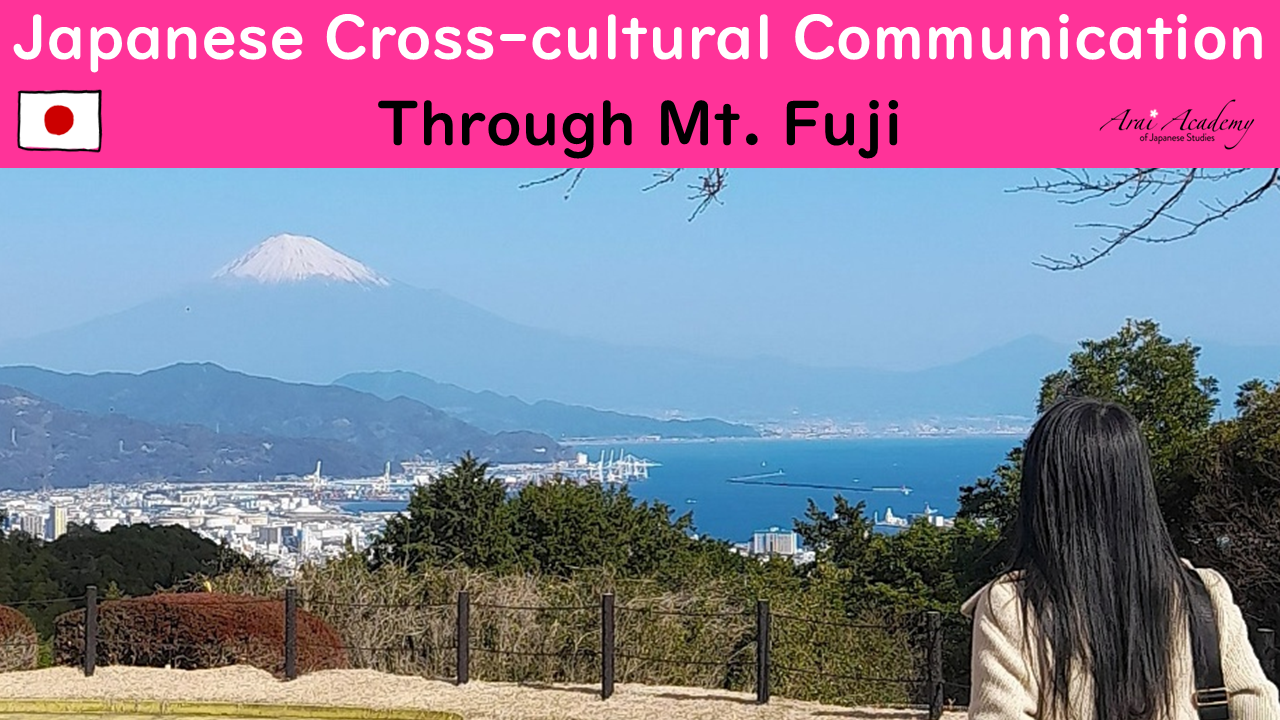
日本語は英語に続く
When people around the world think of Japan, one of the first images that comes to mind is Mt. Fuji.
The famous ukiyo-e artist Katsushika Hokusai loved Mt. Fuji and featured it in many of his works. I love Mt. Fuji too.
I was born and raised in Shizuoka, where Mt. Fuji has always been part of daily life. As a child, I genuinely believed that everyone in Japan could see Mt. Fuji. After all, it is the tallest mountain in the country.
It was not until I became an adult that I realised this was not the case.
For me, Mt. Fuji was simply always there.
In the UK, people are known for talking about the weather. In the area where I grew up, we often talked about Mt. Fuji in the same way.
"Did you see Mt. Fuji today?"
"The snow is much deeper than yesterday."
"The sunset on Fuji was beautiful this evening."
"There are unusual clouds around the summit today."
These were ordinary conversations for us.
Mt. Fuji Is Different Every Day
I grew up looking at Mt. Fuji every day.
Although it is the same mountain, it never looks exactly the same.
It looks different in the morning and in the evening.
It looks different in summer and in winter.
Many people imagine Mt. Fuji covered with snow all year round. However, during the summer, the mountain often appears dark and almost black.
Sometimes, after a rainy day in town, I wake up the next morning to find the summit covered in fresh white snow.
Some days it stands clearly against a bright blue sky.
Some days it disappears completely behind clouds.
Yet no matter how it looks, Mt. Fuji is always there.
What Mt. Fuji Taught Me
As I grew older, I realised that Mt. Fuji had been teaching me something all along.
Typhoons come.
Heavy rain comes.
Earthquakes happen.
Yet Mt. Fuji remains.
Watching it throughout my childhood, I learned that true strength does not panic.
It remains steady.
At the same time, I learned that change and stability can exist together.
Mt. Fuji changes every day, yet its presence never changes.
Why Japanese People Notice Nature
This also helped me understand something about Japanese culture.
Japanese people have always paid close attention to nature.
We celebrate cherry blossoms in spring.
We admire autumn leaves.
We enjoy viewing the moon.
And we watch Mt. Fuji.
Nature is not simply scenery.
It is part of how we experience life.
Mt. Fuji itself has long been regarded as a sacred mountain. A shrine stands at the summit, reflecting a traditional Japanese belief that nature and spirituality are deeply connected.
I believe this sensitivity to nature is an important part of the Japanese mind.
The Foundation Beneath the Mountain
There is another lesson Mt. Fuji taught me.
Mt. Fuji is incredibly tall.
But it does not stand tall because of its peak.
It stands tall because of its wide foundation.
When people look at Mt. Fuji, they naturally focus on the summit.
But what supports that height is the vast base beneath it.
The foundation makes the mountain possible.
Japanese Learning Works the Same Way
As a Japanese language teacher, I often think about this.
Many learners want to speak quickly.
They want to learn advanced grammar.
They want to reach a higher level as soon as possible.
I completely understand that feeling.
But the learners who grow the most are the ones who build a strong foundation.
For me, that foundation is not only vocabulary and grammar.
It is understanding the Japanese mind behind the language.
I often describe my approach with a simple idea:
Mind = Expression
Japanese expressions are born from Japanese ways of thinking, feeling, and relating to others.
For example, the phrase yoroshiku onegaishimasu has no perfect English equivalent.
Why?
Because behind the expression are values such as mutual respect, appreciation, cooperation, and the wish to build a good relationship.
The expression exists because the mind exists first.
Language is not only words.
Language reflects how people see the world.
That is why I encourage learners to understand Japanese culture, values, and ways of thinking alongside vocabulary and grammar.
Just as Mt. Fuji stands on a wide and solid foundation, meaningful Japanese communication grows from a strong foundation too.
Not Only a Mountain, But Water
Mt. Fuji is not only a mountain.
Its snowmelt travels underground for many years before emerging as the crystal-clear springs of Kakita River, one of the most beautiful spring-water rivers in Japan.
The same water also enriches the land around it. Many people believe that this pure water contributes to the quality of Shizuoka's famous tea.
I have always felt a special connection to this story.
My family name is Arai (新井).
The character 新 means "new."
The character 井 means "a well."
Of course, I do not know the exact origin of my family name.
Yet whenever I think about water emerging from underground and quietly supporting people's lives, I feel an unexpected connection.
Water is rarely the centre of attention.
Yet it is essential.
It flows unseen.
It supports life.
In many ways, teaching feels similar.
Why I Continue This Work
Through Japanese language, Japanese culture, and Japanese ways of thinking, I hope to support people around the world who love Japan.
This is why I focus on Japanese Cross-cultural Communication.
I want learners not only to understand Japanese words but also to understand the heart behind them.
Because that is where communication truly begins.
Every day, I saw Mt. Fuji.
As a child, I simply thought it was beautiful.
As an adult, I realised it had been teaching me something all along.
Mt. Fuji does not stand tall because of its peak.
It stands tall because of its wide and solid foundation.
I believe Japanese communication works in the same way.
For me, a strong foundation is not only vocabulary and grammar.
It is understanding the Japanese mind behind the language.
Because language is more than words.
Expression begins with mind.
A Final Thought
If Japanese has ever felt difficult, overwhelming, or out of reach, I hope this story has shown you another perspective.
Perhaps learning Japanese is not about memorising more words or studying harder.
Perhaps it begins by understanding the people behind the language.
The way they think.
The way they connect with nature.
The way they communicate.
The way they see the world.
For me, that is where meaningful communication begins.
And that is the foundation of everything I teach.
For Busy Professionals
For business professionals who have very limited time, I created Japanese Cross-cultural Communication Executive Japanese Communication for Global Professionals - Online Course.
Rather than focusing only on language, it introduces the Japanese mindset, cultural values, and communication styles that help build trust and meaningful relationships.
With minimum effort and maximum results, learners can begin connecting with Japanese colleagues and clients in a natural and authentic way.
Because when we understand the mind behind the language, communication becomes smoother, more meaningful, and more enjoyable.
For Beginner Learners
If you would like to start speaking Japanese with confidence, I created Master Speaking Japanese - Online Course based on the same philosophy shared in this article.
The materials have been developed and refined over more than twenty years of teaching and have helped many learners discover something surprising:
Japanese can be much easier to speak than they first imagined.
My greatest joy is seeing learners say,
"Everything became clear."
"For the first time, I felt confident speaking Japanese."
"I realised Japanese was not as difficult as I had believed."
These are some of the reasons I continue sharing the Mind = Expression approach with learners around the world.
And that simple idea continues to guide everything I do.
Let's grow together.
Mineko Arai
Japanese Cross-cultural Communication Specialist
世界中の人が思い浮かべる富士山
世界中の人が日本と聞いて思い浮かべるものの一つが富士山です。
北斎も富士山を描き、世界遺産にも登録されています。
でも私にとって富士山は観光地ではありません。
静岡で育った私にとって、富士山は毎日の暮らしの中にある存在でした。
イギリスで天気の話をするように、私が育った地域では、
「今日の富士山見た?」
という会話をよくします。
雪の量や雲のかかり方、夕日に染まる赤富士など、同じ山でも毎日違う表情を見せてくれます。
日本人の心と自然
大人になって気づいたのですが、日本人は自然を通して季節や自分自身を感じる文化を持っているように思います。
桜を楽しみ、紅葉を眺め、月を愛で、富士山を見る。
また、富士山の山頂には神社があり、古くから信仰の対象でもありました。
自然の中に神聖さを感じることも、日本人らしい感性の一つではないでしょうか。
Mind Creates Expression
私は、日本語は日本人の心から生まれていると思っています。
例えば「よろしくお願いします」。
英語には完全に対応する言葉がありません。
その背景には、調和を大切にする心、相手への敬意、良い関係を築きたいという思いがあります。
つまり、
Mind creates Expression.
心があるから表現が生まれるのです。
富士山が教えてくれたこと
子どもの頃から見てきた富士山は、もう一つ大切なことを教えてくれました。
富士山は高い山ですが、その高さを支えているのは広い裾野です。
土台があるから高く立てるのです。
私は日本語学習も同じだと思っています。
語彙や文法より前に、日本人の考え方や感性を理解すること。
それが私の考える Japanese Mind です。
富士山の水と私の仕事
富士山は山であるだけでなく、水でもあります。
雪解け水は地下を流れ、やがて柿田川の湧水となり、静岡のお茶もその恵みを受けています。
私は「新井」という名前にも不思議な縁を感じています。
「新」は新しく湧き出ること。
「井」は井戸。
見えないところで人を支える水のような存在に、私は心を惹かれます。
だから私は日本語だけではなく、日本文化や日本人の感性も含めた Japanese Cross-cultural Communication を伝えています。
世界中の日本ファンが、日本をもっと深く理解し、日本語をもっと楽しく学べるように。
その想いを込めて、私はこれからも
Mind = Expression
を伝え続けたいと思っています。
新井峰子
Japanese Cross-cultural Communication Specialist
For learners who value quiet, steady growth
Join our mailing list to receive gentle insights, stories, and small encouragements for long‑term learning — at your own pace.
We hate SPAM. We will never sell your information, for any reason.


