
Zen Japanese (from Kyoto) – The Beauty of What Remains
Oct 02, 2026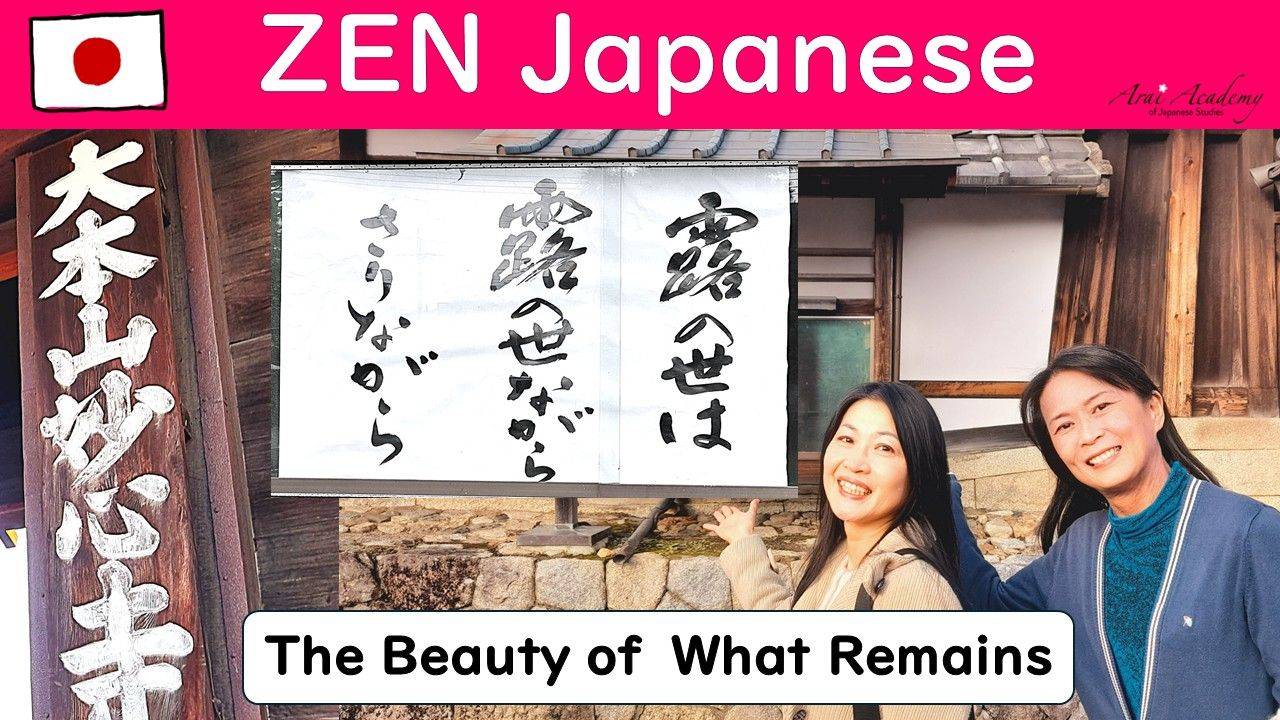
In Japanese life, a quiet sense of Zen is always present. Even today, the old teachings continue to breathe softly in everyday moments.
One of my closest friends lives at Myōshinji in Kyoto — the largest Zen temple in the city. Every month, she sends me the teaching displayed at the temple gate, a message offered to people around the world who love Japan.
This Month’s Teaching
“Tsuyu no yo wa / tsuyu no yo nagara / sari nagara”
A haiku by Kobayashi Issa.
In these few words, Issa captures a deeply human feeling. Life is as fleeting as dew. We know, in our minds, that everything eventually disappears. And yet, the heart cannot accept it so easily. When we lose someone precious, the sadness and longing cannot be explained by reason.
Issa wrote this poem after losing several of his young children. He understood impermanence, but his heart could not keep up. That honest human struggle is the essence of this verse.
Reading this poem, the word “arigatō” quietly came to me. Its origin is arigatō = “it is difficult for this to exist.” In other words, the fact that someone or something is here, right now, is already a miracle — never something to take for granted.
The person in front of you. The one who cares for you. The one who supports you.
We often treat these presences as “normal,” but I don’t feel that way. I always feel that these presences are never guaranteed. That is why meeting them — and responding to them — with gratitude feels so important. And gratitude is not only for people.
- The opportunities we receive
- The time we are given
- Everything that exists in our day today
For me, all of these are “arigatai” — precious things. None of them should be wasted. They deserve to be held with care.
To those studying Japanese
When I taught at the university and at the Ministry of Foreign Affairs, students studied because it was their work. Now, many of you study Japanese while working full‑time, running your own business, or managing busy lives.
That is why simply “having time to learn today” is already something to be grateful for. Today’s learning can only happen today. Today’s awareness can only be born today.
I am truly grateful that you are here, reading this message. Those who study Japanese. Those who work with Japan. Those who love Japan. Your presence is never something I take for granted.
For me, every lesson is precious and irreplaceable — no two lessons are ever the same. Each online material is also created with care, designed so that it can speak to you even through a screen. The blog, the teachers’ community, Learning Café Live, seminars — I approach all of them with the same heart.
I appreciate everyone I work with — my 1‑to‑1 students, Master Speaking Japanese learners, Japanese Cross‑cultural Communication learners, and those who read my blog. I am grateful for every moment we share.
These small moments of care become our life itself. In work, in relationships, in everything — living today with appreciation is the spirit of arigatō.
What are you grateful for today?
Hold that feeling gently as you move through your day. It may become the first step toward a kinder future, both in your relationships and in your work.
If you’d like to continue this quiet journey of gentle insights, you’re warmly welcome at the Learning Café.
Mineko Arai
Japanese Cross-cultural Communication Specialist
Arai Academy of Japanese Studies
Makiko Tokai
Myōshinji
日本人の生活には、禅(ぜん)の静かな考えが流れています。
今も、昔からの教えがそっと息づいています。
私の親友は、京都にある妙心寺(みょうしんじ)にいます。
京都で一番大きい禅寺です。
毎月、世界の「日本が好きな人」に、このお寺の門前に掲げられた教えを送ってくれます。
今月の教え
「露の世は 露の世ながら さりながら」
小林一茶の句 の この短い言葉には、深い人間の感情が宿っています。
露のように儚いこの世。 命はいつか消えるものだと、頭では分かっている。 それでも、そうはいっても、心は簡単に割り切れない。 大切な人を失ったときの悲しみや未練は、理屈ではどうにもならない。
一茶は幼い子どもたちを次々と亡くし、その深い悲しみの中でこの句を詠んだと言われています。 「無常を理解していても、心は追いつかない」 その人間らしさが、この句の核心です。
この句を読んで、私はふっと「有難う(ありがとう)」という言葉が思い浮かびました。 語源は 有難う=有ることが難しい。 つまり、今ここに存在してくれていること自体が奇跡であり、決して当たり前ではないということです。
目の前にいる人。 自分を大切にしてくれている人。 支えてくれている人。
こうした存在は、つい “当たり前” だと思ってしまいがちですが、本当はそうではないんですね。 だからこそ、いつもその存在に感謝の気持ちで接することが大切だと感じています。
そして、感謝すべきなのは人だけではありません。
- いただいた機会
- いただいた時間
- 今日ここにあるものすべて
私たちの日常の中で、これらはすべて “有難い” もの。 だからこそ、何一つ無駄にせず、大切にしていきたいと思うのです。
日本語を学んでいる人たちへ
私は、大学で教えていたときも、外務省で教えていたときも、 「学ぶことが仕事」という環境で頑張る人たちを見てきました。
でも今は、会社で働きながら、 自分のビジネスを運営しながら、 限られた時間の中で日本語を学んでいる人がたくさんいます。
だからこそ、 「今日、学ぶ時間がある」 それだけで十分に感謝できることだと思います。今日の学びは、今日しかできないことですし、 今日の気づきは、今日しか生まれませんからね。
私は、今ここで私の記事を読んでくださっている皆さんに心から感謝しています。
日本語を学んでくれている皆さん。 日本とビジネスをしてくれている皆さん。 日本を愛してくれている皆さん。
みなさんが “今ここにいる” ことは、当たり前ではありません。 だからこそ、私は心から感謝しています。
私にとってレッスンは毎回真剣そのもので、 二度と同じレッスンはないからこそ、毎回がかけがえのない時間です。
オンライン教材も、一つ一つ心を込めて、 オンラインでも心に響くようにデザインして届けています。
ブログ、日本語教師会、Learning Café の Live、セミナー—— すべて同じ気持ちで取り組んでいます。
この積み重ねが、私たちの人生そのものですね。
仕事でも、人間関係でも、 今日を大切に生きること。
それが「有難う」の精神です。
皆さんは、何に感謝していますか。
その気持ちを胸に、今日一日を過ごしてみてください。 きっと、人間関係でも仕事でも、 素敵な未来につながる一歩になったら素敵ですね。
もし、この静かな気づきの旅をそっと続けたいと感じてくださるなら、 Learning Café でもっと読み深めてくださったらうれしいです。
新井峰子
Japanese Cross-cultural Communication Specialist
Arai Academy of Japanese Studies
東海真紀子
妙心寺
For learners who value quiet, steady growth
Join our mailing list to receive gentle insights, stories, and small encouragements for long‑term learning — at your own pace.
We hate SPAM. We will never sell your information, for any reason.


