
My Language Learning Journey - Why I Couldn’t Speak English…= Your Japanese Problem
May 24, 2026
Why Japanese Word Order Feels So Difficult — And How to Speak More Naturally
Have you ever learned a Japanese sentence pattern and then felt shocked by how different the word order is from English?
If so, you are not alone.
Many Japanese learners understand grammar and vocabulary, but still struggle to form sentences smoothly when speaking. One of the biggest reasons is that Japanese sentence structure follows a completely different way of organising information.
Interestingly, I experienced the same frustration myself when I was learning English.
As a native Japanese speaker, I found English word order extremely difficult at first. I often knew what I wanted to say, but I could not build the sentence quickly enough in conversation. By the time I organised my thoughts, the topic had already changed.
Over time, however, I discovered something important:
The difficulty was not simply grammar. It was the difference in perspective between Japanese and English sentence structure.
Understanding this changed the way I learned languages, and today I would like to share that insight with you.
My Background as a Japanese Teacher and Language Learner
こんにちは。I’m Mineko Arai, a professional Japanese teacher with more than 20 years of teaching experience at UK universities, the Foreign Office, and Japanese companies in London.
I also studied Applied Japanese Linguistics, and throughout my career I have worked as:
- an English language learner
- a Japanese language teacher
- an applied Japanese linguist
Because of these experiences, I understand both sides of language learning: the challenges Japanese learners face and the methods that help students improve naturally.
Why Japanese Word Order Feels “Backwards”
One of the biggest differences between Japanese and English is the order in which information is presented.
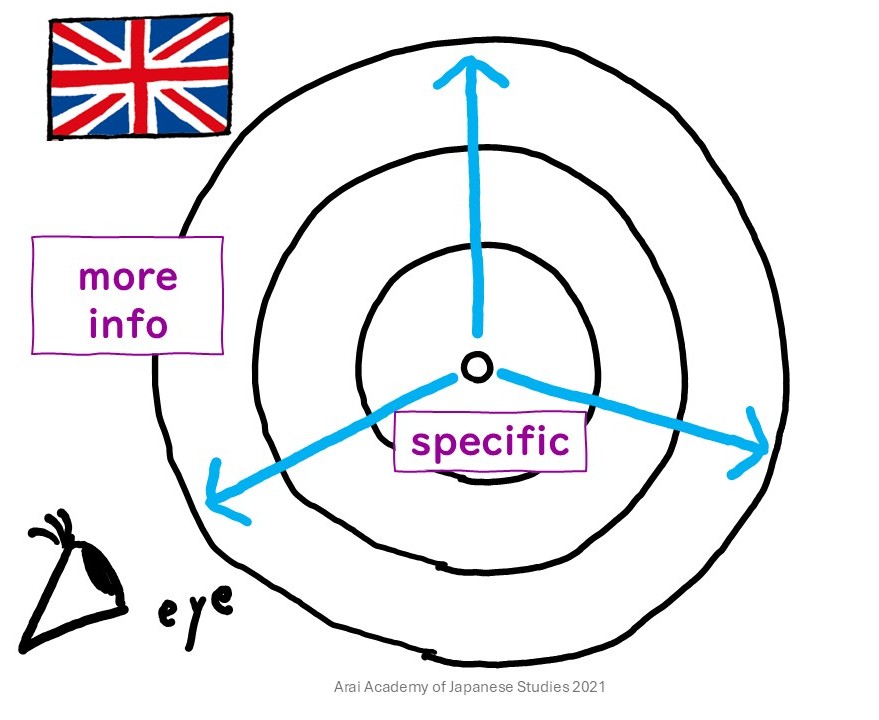
English Sentence Structure
English often begins with the most important action or subject first, then adds extra details afterward.
For example:
“I study Japanese at school every day.”
The key action — “study” — appears early in the sentence.
Japanese Sentence Structure
Japanese works differently.
Japanese often starts with the broader context and gradually moves toward the most important point at the end.
For example:
(私は) 毎日 学校で 日本語を 勉強します。
Literal order:
- every day
- at school
- Japanese
- study
The final verb gives meaning to everything before it.
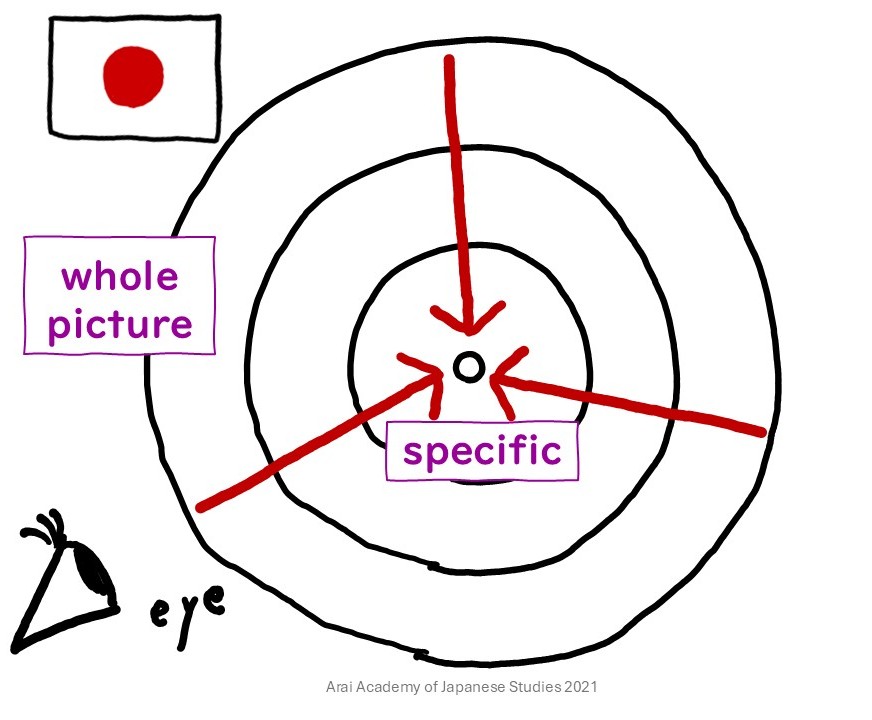
In other words, Japanese sentences build toward the main action.
“Mind = Expression”
I often say:
“Mind = Expression.”
The way people perceive the world influences the way they express ideas in language.
Japanese speakers tend to observe the overall situation first before arriving at the main action or conclusion. This perspective naturally appears in Japanese sentence structure.
English speakers, however, often prefer to state the key point immediately and then explain further details afterward.
Understanding this difference helps Japanese learners stop translating directly from English and begin thinking more naturally in Japanese.
Questions in Japanese and English
Question sentences also show this difference clearly.
English Questions
In English, you usually signal a question at the beginning:
- What are you doing?
- Do you like sushi?
- Is it fun?
The listener immediately knows a question is coming.
Japanese Questions
In Japanese, the sentence often remains unchanged until the very end:
寿司が好きですか?
The particle “か (ka)” at the end marks the sentence as a question.
Again, the important information comes later.
This is one reason Japanese listening and speaking can initially feel unfamiliar to English speakers.
My Experience Learning English
When I entered university in Tokyo, I could hardly speak English despite years of studying grammar and vocabulary.
Many of my classmates spoke fluently and confidently because they had lived abroad or attended English conversation schools from a young age. I often felt intimidated.
I understood grammar, but I could not express myself naturally in real conversations.
I remember many moments when I wanted to say something, but while I was mentally organising the sentence, the conversation moved on without me.
Eventually, I realised I needed to stop translating directly from Japanese into English. I had to train myself to think using English word order itself.
That same principle applies to Japanese learners today.
How to Improve Your Japanese Speaking Skills
- Prepare Your Own Sentences
After learning a new expression, take time to create original sentences about yourself.
Do not only memorise textbook examples.
Instead, think carefully about how to express your own thoughts in Japanese.
- Practise Speaking Aloud
Speaking aloud is extremely important.
Before talking with someone, rehearse your sentences alone first.
This method helped me enormously while learning English. When opportunities came during conversations, I already had useful sentence patterns prepared in my mind.
As a result, I became more confident and could respond more naturally.
- Learn by Speaking
As a Japanese teacher, my core teaching method is:
“Learn by speaking.”
When you actively say your own expressions aloud immediately after learning new expressions, your brain remembers them more effectively because speaking uses multiple physical and mental processes at the same time.
Speaking practice helps you become familiar with Japanese word order much faster than silent study alone.
Language Learning Is Like Learning the Piano
Learning Japanese speaking skills is similar to learning the piano.
You cannot improve simply by reading or watching about it.
Daily physical practice is essential.
Even five minutes of speaking practice every day can produce significant improvement after one month.
The key is consistency. Actually, my students who play a music instrument have this learning habit. Therefore, they start speaking Japanese faster.
Final Thoughts
If Japanese word order feels unnatural to you right now, please do not worry.
You are not failing.
You are learning a completely different way of organising thoughts and expressing ideas.
Once you begin understanding how Japanese speakers naturally structure information, forming sentences becomes much smoother.
Start with short sentences.
Speak aloud every day.
Focus on expressing your own ideas.
Step by step, Japanese word order will begin to feel natural — and your speaking confidence will grow steadily.
If Japanese still feels difficult despite years of study, please do not blame yourself.
Many learners come to Master Speaking Japanese after feeling frustrated with apps, textbooks, and study methods that never fully helped them speak naturally.
The course focuses on helping you internalise Japanese sentence patterns through guided speaking practice so that Japanese gradually begins to feel more natural and automatic.
One learner described it as:
“A huge confidence booster — after 20 years of studying Japanese, things finally started sticking.”
Another learner who had studied Japanese for more than 20 years told me:
“‘Master Speaking Japanese’ fills the hole.”
If you would like a clearer and more structured way to build real speaking confidence, you can explore Master Speaking Japanese here.
Link/button: www.masterspeakingjapanese.com
→ Explore Master Speaking Japanese
For learners who value quiet, steady growth
Join our mailing list to receive gentle insights, stories, and small encouragements for long‑term learning — at your own pace.
We hate SPAM. We will never sell your information, for any reason.


