
Tanabata 七夕 — My Gentle Wish for Your Japanese Learning
Jul 07, 2026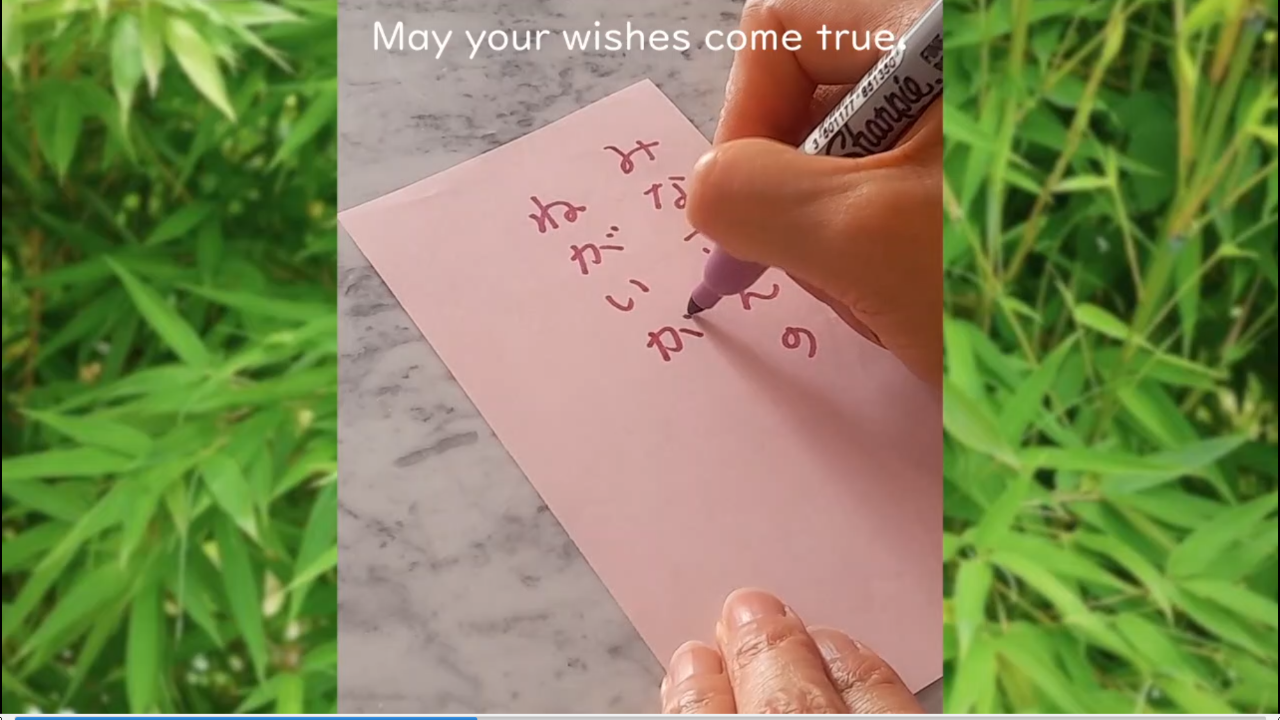
The Japanese version is below, for learners who wish to read in Japanese. (日本語で読みたい方のために、日本語版は英語の下にあります)
July 7th is Tanabata 七夕, the Star Festival in Japan.
The word “Tanabata” 七夕 means “the evening of the seventh day,”
but the reading *tanabata* comes from an old Japanese tradition
called “Tanabata” 棚機(たなばた).
In this tradition, a chosen woman stayed in a small house near the water.
She purified her mind and body,
and carefully wove cloth to offer to the gods.
It was a quiet and sacred ritual.
This image of a pure woman weaving cloth
later became connected to the story of Orihime 織姫,
the weaving princess in the Tanabata legend.
So Tanabata is a culture created from
an old Japanese ritual *and*
a romantic Chinese story about two stars,
Orihime 織姫 and Hikoboshi 彦星,
who can meet only once a year.
On Tanabata, people write their wishes on small papers
called *tanzaku* 短冊 and hang them on bamboo.
This custom began in the Heian period,
when people prayed for their skills to improve.
People wrote wishes like:
“I want to write beautiful characters.”
“I want to compose good poems.”
They prayed quietly for their learning to grow.
Bamboo grows straight and strong toward the sky,
so people believed it could carry their wishes upward.
This gentle wish — “I hope my learning will improve” —
is something many Japanese learners can understand deeply.
I also wrote a wish for you.
On my own *tanzaku* 短冊, I wrote:
「みなさんのねがいがかないますように」
May your wishes come true.
Learning a language takes time.
Just like a Tanabata wish,
your Japanese will grow little by little.
To support this “little by little,”
I created Master Speaking Japanese.
May your Japanese learning grow quietly,
and steadily, day by day.
7月7日は七夕(たなばた)の日です。
「七夕」という漢字は「七の日の夕方」という意味ですが、
「たなばた」という読み方は、昔の日本で行われていた
「棚機(たなばた)」という行事がもとになっています。
棚機では、えらばれた女性が水の近くの小さい家で心と体をきれいにして、
神さまにささげる布をていねいに作りました。
とても静かで、神聖な行事でした。
この「布を作る清らかな女性」のイメージが、
あとで七夕の物語の織姫(おりひめ)につながりました。
つまり、七夕は日本の棚機の行事と、
中国の織姫・彦星(ひこぼし)のロマンチックな星の物語が
一つになって生まれた文化です。
七夕の日には、自分の願いを書いて笹(ささ)につけます。
これは、平安時代から広がった
「スキルが上手になりますように」と願う行事が始まりでした。
そのころの日本人は、
「字が上手になりますように」
「短歌が書けますように」
など、自分の学びがよくなるように静かに祈りました。
笹はまっすぐ上に伸びる、力の強い植物です。
それで、日本人は「笹は願いを空に届けてくれる」と考えました。
この「学びが上達しますように」という七夕の気持ちは、
日本語を学ぶみなさんにも、やさしく心にひびくと思います。
私も、みなさんの学びが静かに伸びていきますようにと願って、
短冊に「みなさんのねがいがかないますように」と書きました。
日本語の学びは、ゆっくり時間をかけて、
短冊の願いのように、少しずつレベルアップしていくものですね。
その「少しずつ」を大切にしたいと思い、
私は Master Speaking Japanese を作りました。
みなさんの日本語の学びが、
静かに、そしてしっかり育っていきますように。
For learners who value quiet, steady growth
Join our mailing list to receive gentle insights, stories, and small encouragements for long‑term learning — at your own pace.
We hate SPAM. We will never sell your information, for any reason.


